

Reading
Options


NCS Code: 1112.0600
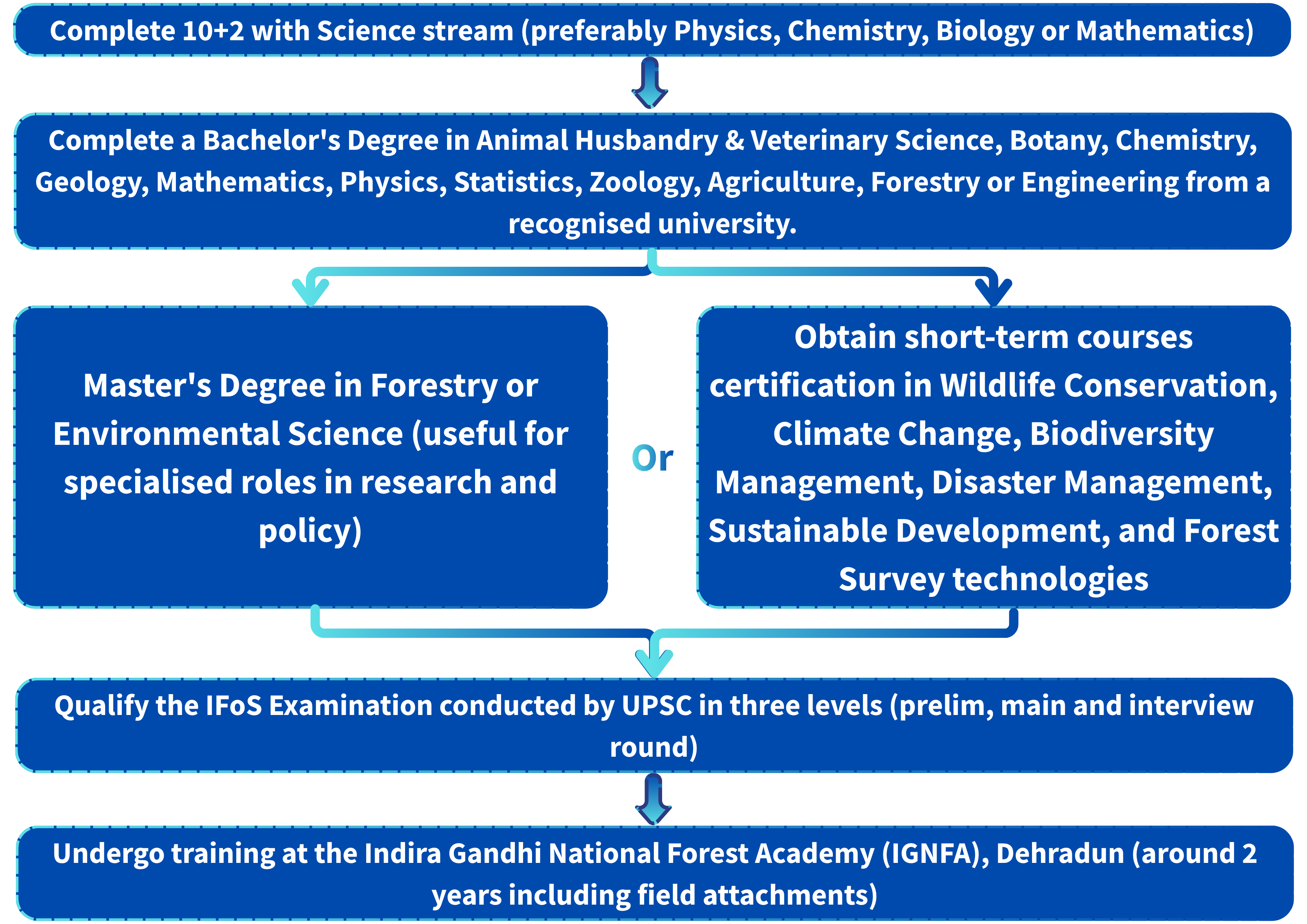
An Indian Forest Officer (IFoS) is a Group A All India Service officer responsible for managing India's forests, wildlife, and biodiversity. Recruited through UPSC, IFoS officers implement the National Forest Policy, oversee national parks, tiger reserves, and protected areas, combat poaching, lead afforestation drives, and address ecological challenges while balancing development with environmental conservation across all states of India.

Strong Knowledge of Forestry and Environmental Science
Leadership and Administrative Skills
Physical Endurance and Field Aptitude
Decision-Making and Crisis Management
Wildlife Conservation Expertise
Communication Skills (oral and written)
Analytical and Research Ability
Integrity and Public Service Orientation

Anshu Pragyan Das
Anshu Pragyan Das’s journey reflects how passion for the environment can translate into meaningful public service. Choosing a career in forestry, she built her expertise in conservation and community engagement, eventually taking on leadership roles in Odisha’s ecotourism initiatives. Through dedication and innovative thinking, she played a key role in transforming Muduligadia near Satkosia into Odisha’s first eco-village. By integrating sustainable livelihoods with conservation, she demonstrated how forest officers can empower local communities while protecting nature. Her journey stands out as an inspiring example of combining purpose, perseverance, and impact in the field of environmental governance.

For More Information , Visit Our Youtube Channel